
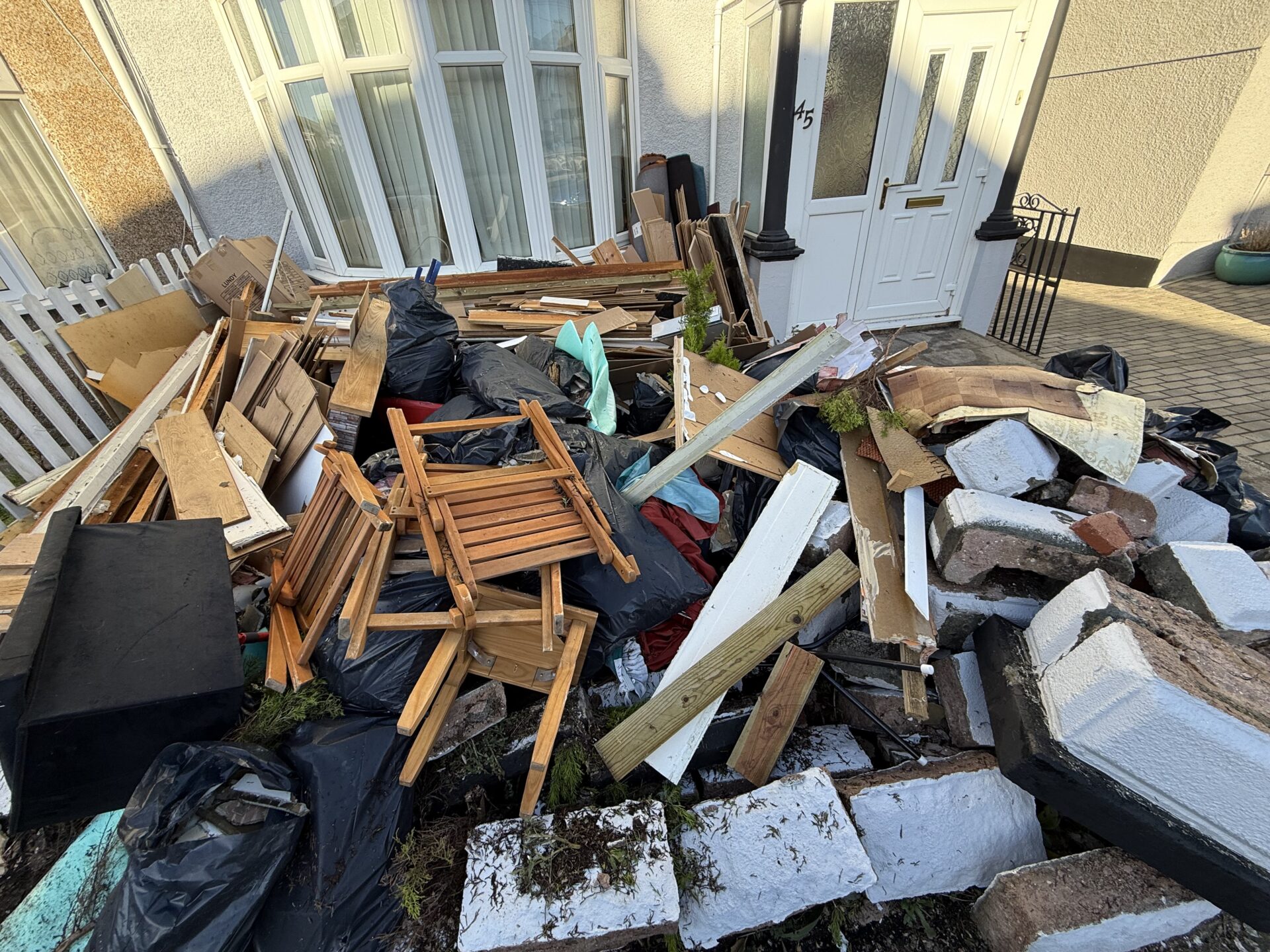
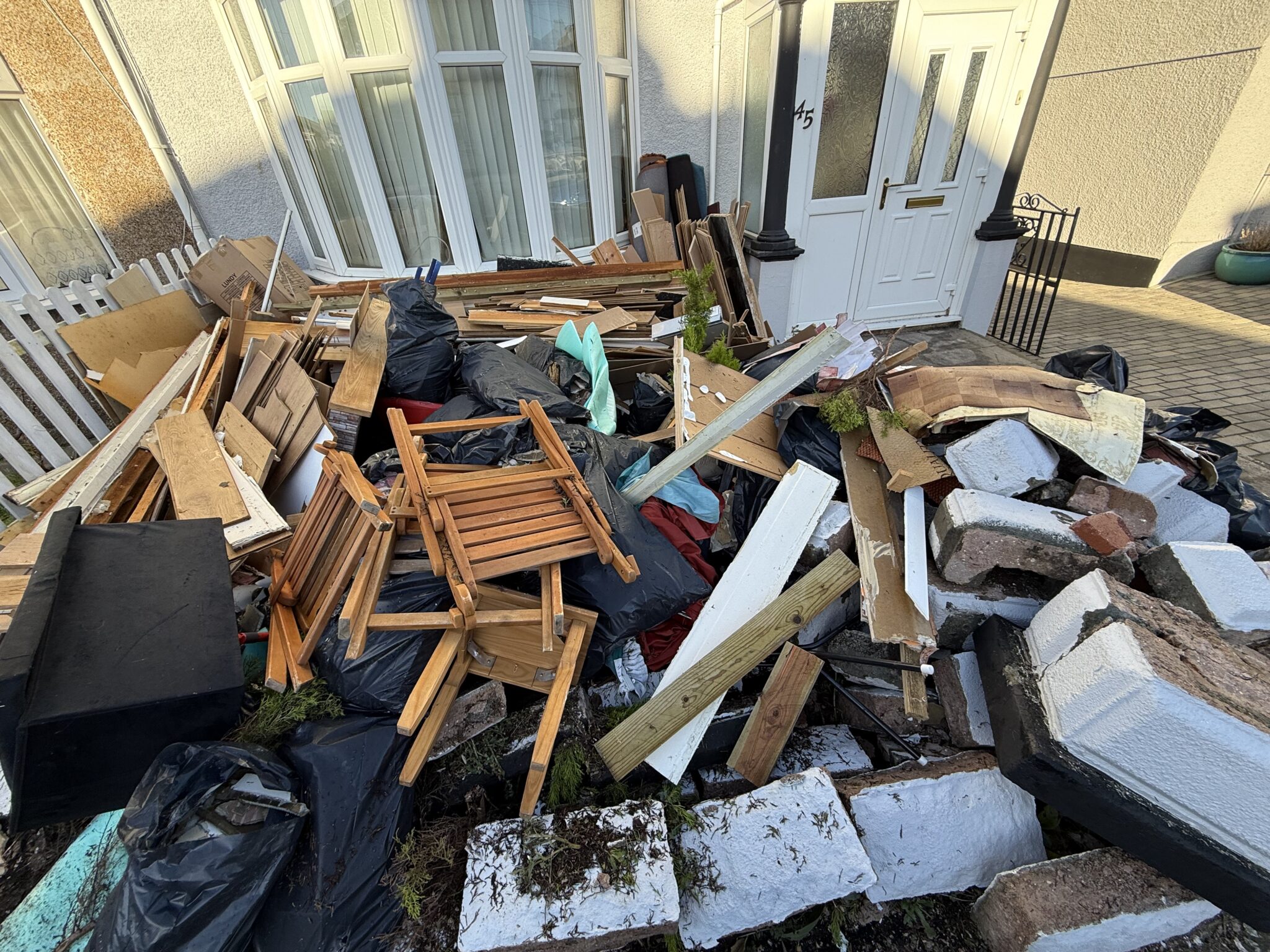
If you’ve never arranged a house clearance before, it can be difficult to know where to start.
How much will it cost? Do you need to be there? What happens to the furniture? Can everything be taken away? What about fridges, mattresses, garden waste or old paint? And, perhaps most importantly, how do you know you’re choosing a house clearance company that will actually deal with the waste properly?
These are the questions people tend to ask once they actually have a property that needs clearing.
Whether you’re dealing with an inherited property, moving house, clearing a rental after tenants have left or simply tackling years of accumulated belongings, the practicalities can be very different from what you might expect.
We’ve put together these house clearance Plymouth FAQs around the questions that matter when you’re actually trying to get a property cleared.
What does a house clearance actually include?
A house clearance generally involves removing unwanted furniture, household possessions and other waste from a property so that it is left substantially clearer and ready for its next use.
That might mean removing the contents of a couple of rooms, or it could mean clearing an entire property from the loft down to the garage and garden.
A typical clearance might include furniture, beds, wardrobes, sofas, tables, chairs, carpets, general household items and electrical appliances. The exact scope depends on the company you use and what is present at the property.
This is one reason it’s worth explaining the job properly when requesting a quote. Saying that you need a “house clearance” can mean very different things depending on the property.
A three-bedroom house that’s mostly furnished is a completely different job from a three-bedroom property that’s been occupied for 40 years and has a full loft, garage and shed.
Good house clearance services Plymouth providers should want to understand that difference before giving you a price.
How much does house clearance cost in Plymouth?
There isn’t one standard price for a house clearance because the amount of work involved can vary enormously between properties.
The biggest factor is usually volume. A property containing a small amount of unwanted furniture will take considerably less time and disposal capacity than one packed with decades of belongings.
Access also matters. A house where everything can be carried directly from the ground floor to a vehicle outside is considerably easier to clear than a flat several floors up, a property with a long carry from the parking area or a house on a street where vehicle access is difficult.
The type of waste matters too. General household contents, heavy rubble, garden waste, electrical appliances and certain restricted materials can all have different disposal requirements.
For that reason, a reputable company should ideally assess the property or ask for enough detailed information and photographs to understand what is involved before confirming a quotation.
If you’re comparing house clearance Plymouth prices, don’t automatically assume the cheapest headline figure is the cheapest overall option. Check what the quotation actually includes, particularly loading, labour, disposal and any potentially restricted items.
Do I have to be at home while the clearance takes place?
No, not necessarily.
This is particularly useful when you’re clearing a property that you don’t currently live in.
For example, if you’ve inherited a house in Plymouth but live elsewhere, travelling to the property purely to supervise a clearance can be inconvenient. Similarly, landlords may need a property cleared between tenancies without being able to spend an entire day there.
Depending on the company and the circumstances, keys can often be provided in advance or access can be arranged through an agent, family member or another authorised person.
The important part is being very clear about what is and isn’t being removed.
If you won’t be present, it’s sensible to identify anything that must remain before the team arrives. Important paperwork, photographs, jewellery, family possessions and other valuables should be removed or clearly separated beforehand.
Can a house clearance company take everything?
This is one of the most common questions we hear, and the answer is: not necessarily.
Most ordinary household contents can be removed, but certain materials are subject to additional rules or require specialist disposal.
Paint, chemicals, asbestos, gas cylinders, clinical waste and some other hazardous materials should not simply be treated as general household waste.
Electrical equipment also requires appropriate handling under the UK’s waste electrical and electronic equipment regulations. Refrigerators and freezers can require specialist treatment because of their refrigerants.
This doesn’t mean a property containing these items can’t be cleared. It means they need to be identified and dealt with through the correct route.
A good house clearance company should tell you about anything that falls outside a standard clearance rather than simply loading it onto the vehicle.
Don’t forget to check out our blog on what can and can’t be taken in a house clearance.
What happens to everything after it leaves the house?
This is something homeowners quite reasonably want to know.
A professional clearance shouldn’t mean that everything disappears into a black hole and ends up in landfill.
Different materials can be separated for recycling, reuse, recovery or appropriate disposal. Furniture in usable condition may have opportunities for reuse, while metals, cardboard, electrical equipment and other materials can be directed towards specialist recycling streams.
The exact destination depends on the material and the facilities available to the waste operator.
This is also why it’s important to use an appropriately licensed waste carrier. The Environment Agency maintains a public register where you can check whether a business is registered to transport controlled waste. Environment Agency waste carrier register
If a company is vague about what happens to your waste, that’s worth questioning before booking.
Can you clear an inherited house in Plymouth?
Yes, and inherited properties are one of the common reasons people arrange a full clearance.
They can also be some of the more complicated properties to clear.
A house may contain decades of furniture, personal possessions, paperwork and stored belongings. There can also be an emotional element that makes the process considerably harder for family members to handle themselves.
Before arranging inherited house clearance, make sure important documents, valuables and belongings that family members want to keep have been identified.
If probate or estate administration is still underway, the person responsible for the estate should also make sure they understand their responsibilities before disposing of possessions.
Once that initial process is dealt with, professional clearance can remove the practical burden of emptying the property.
Can house clearance include the garage, loft and garden?
It can, but these areas need to be included when the job is quoted.
This sounds obvious, but it’s one of the easiest ways for the scale of a clearance to be underestimated.
A house may look relatively clear when you walk through the main rooms, only for the loft to contain 20 years of boxes and the garage to be packed from floor to ceiling.
Gardens can be similar. An overgrown garden might contain old fencing, broken furniture, sheds, garden equipment and accumulated waste that has been sitting there for years.
If you’re requesting house clearance services Plymouth, mention these areas from the outset. It gives the company a much more realistic idea of the volume and prevents awkward conversations about additional work later.
What about furniture that is still in good condition?
Usable furniture doesn’t necessarily need to become waste.
Depending on its condition, age and demand, furniture can sometimes be reused, donated or passed on rather than simply disposed of.
This is worth considering before a clearance because one of the advantages of separating reusable items is that they can potentially have another life.
That said, don’t assume that every old item will be accepted by a charity or resale organisation. Condition, fire safety requirements, hygiene and storage capacity can all affect whether an organisation can take something.
If you’re using a clearance company, ask whether reusable furniture is separated from general waste and what happens to it afterwards.
Can a house clearance company remove electrical appliances?
Generally, yes, although electrical equipment needs to be handled appropriately.
Large appliances such as washing machines, cookers, dishwashers, televisions, fridges and freezers are common in house clearances.
Under the WEEE regulations, waste electrical and electronic equipment needs to be collected and treated through appropriate systems rather than simply being disposed of as ordinary household rubbish.
This is another reason to give an accurate description of what’s inside the property when requesting a quote.
A couple of appliances alongside normal household contents is very different from a property containing dozens of electrical items.
Can you clear a house after tenants have left waste behind?
Yes, although landlords should be careful about the circumstances in which belongings are removed.
A tenant leaving furniture, rubbish or personal possessions behind doesn’t automatically mean a landlord can immediately dispose of everything without considering their legal obligations.
If you’re dealing with an abandoned rental property, establish what can legally be treated as abandoned and whether the tenant needs to be contacted or given an opportunity to collect their belongings.
Once you’ve established that the items can be removed, professional clearance can be a practical way of getting the property ready for the next tenancy.
This can be particularly useful when the property needs to be turned around quickly and there is more waste than can realistically be dealt with through normal household collections.
Is house clearance different from waste removal?
There is considerable overlap, but the terms aren’t always used to mean exactly the same thing.
Waste removal tends to focus on removing unwanted waste from a property, whereas house clearance usually involves clearing the contents of a property or a substantial part of it.
For example, removing a pile of garden waste and several broken appliances could be a waste removal job. Emptying a three-bedroom house, garage and shed after someone has moved or passed away would generally be described as a house clearance.
In practice, professional house clearance services Plymouth companies may provide both.
The important thing is to explain what you actually need removed rather than getting too caught up in the terminology.
Is it better to hire a house clearance company or do it myself?
For a small clearance, doing it yourself can make perfect sense.
If you’ve got a few unwanted pieces of furniture and access to a suitable vehicle, taking them to the appropriate facility may be straightforward.
The equation changes when you’re dealing with an entire property.
You have to consider the number of trips, vehicle capacity, loading and unloading, recycling centre restrictions, disposal charges and the physical effort involved. A house that looks manageable can quickly turn into a multi-day job.
There’s also the question of time. If you’re trying to sell an inherited property, prepare a rental for new tenants or complete a move, spending several weekends clearing waste may not be particularly attractive.
Professional clearance doesn’t necessarily make every job cheaper. What it can do is make a large job considerably easier to organise and complete.
How do I choose between house clearance companies in Plymouth?
Start with the basics. Check that the company is properly authorised to transport waste and look for evidence that they understand how different waste streams are handled.
Then look beyond the headline price.
Ask what the quotation includes, whether labour and disposal are included, what happens with electrical appliances and restricted materials, and whether additional charges could arise because of access or unexpected waste.
It’s also worth paying attention to how the company communicates before you’ve even booked. If getting a straight answer about what they will remove is difficult, that probably isn’t going to improve once the team arrives.
A good house clearance company should make the process feel clearer, not more complicated.
How far in advance should I book a house clearance in Plymouth?
This depends on the size and urgency of the job.
A straightforward clearance may be possible to arrange relatively quickly, while larger properties require more planning, particularly if there are access issues or substantial quantities of waste.
If the clearance is linked to a property sale, probate, tenancy change or renovation, it’s better to arrange it before it becomes an emergency.
The most useful thing you can do when enquiring is provide an honest description of the property. If possible, photographs of each room, the garden, loft and garage can give a clearance company a much better understanding of what they’re dealing with.
That usually produces a more realistic conversation about availability, cost and how long the work is likely to take.
What should I do before the clearance team arrives?
The most important thing is to remove anything you definitely want to keep.
Once the clearance begins, items can move quickly, particularly when a property contains a lot of similar-looking possessions.
Set aside important documents, photographs, jewellery, cash, sentimental belongings and anything that needs to remain in the property.
If other family members are involved, agree what is being kept before the clearance day rather than trying to make those decisions while a team is carrying furniture out of the house.
Then make sure the team can access the property. If there are parking restrictions, narrow entrances, flights of stairs or other access issues, mention them when booking.
Good preparation doesn’t mean doing the clearance yourself. It simply means making sure the people carrying it out know exactly what they’re there to remove.
What should a good house clearance service feel like?
It should feel fairly straightforward.
You shouldn’t need to become an expert in waste regulations, disposal facilities or vehicle logistics just to empty a property.
The company should be able to explain what they can remove, identify anything requiring special treatment, provide a clear quotation and tell you what happens next.
For homeowners dealing with a normal clear-out, that’s usually all they want: a reliable team, a clear price and the confidence that the waste won’t simply become somebody else’s problem.
That’s ultimately what good house clearance Plymouth services are there to provide. Taking a job that can feel overwhelming and turning it into a practical, properly managed process.